
Freshwater Fish of the Great Lakes: Species Identification Guide
A complete guide to the freshwater fish species found in the Great Lakes, from salmon and trout to bass, walleye, and panfish.
The Great Lakes — Superior, Michigan, Huron, Erie, and Ontario — hold about 20% of the world's surface freshwater and support one of the most diverse freshwater fish communities on Earth. Here's a guide to the key species you'll encounter.
Salmon and Trout (Salmonids)
Lake Trout
The native top predator of the Great Lakes. Found in all five lakes, particularly Lake Superior which still has healthy native populations. Lake trout prefer deep, cold water and can live over 50 years.
Chinook Salmon
Introduced from the Pacific Northwest. Now the primary sport fish in Lakes Michigan, Huron, and Ontario. Run into tributary rivers in fall to spawn.
Coho Salmon
Also introduced from the Pacific. Smaller than Chinook but still popular with anglers. Found in all Great Lakes except Lake Superior.
Rainbow Trout (Steelhead)
Lake-run rainbow trout that migrate into tributary rivers to spawn. Found in all Great Lakes. Known for spectacular jumps.
Brown Trout
Introduced from Europe. Found in nearshore waters of the Great Lakes and tributary rivers. More challenging to catch than other trout.
Bass and Sunfish
Smallmouth Bass
Abundant throughout the Great Lakes, particularly Lake Erie and Lake Huron. Prefer rocky shorelines and shoals. Lake Erie's smallmouth fishery is world-class.
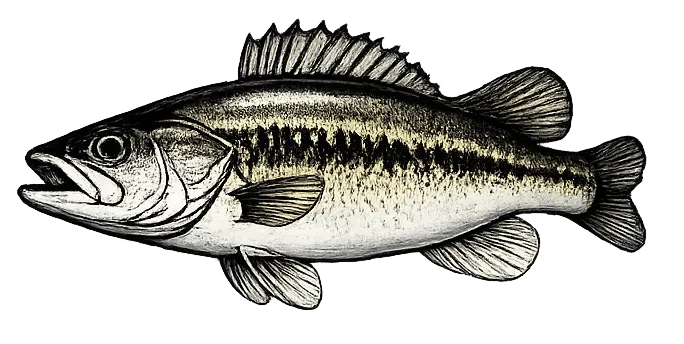
Largemouth Bass
Found in warm, shallow, vegetated areas of the Great Lakes — bays, marinas, and river mouths. More common in Lake Erie and Lake Ontario.
Pumpkinseed, Bluegill, and Crappie
Common panfish found in nearshore areas, bays, and connecting waters throughout the Great Lakes system.
Other Game Fish
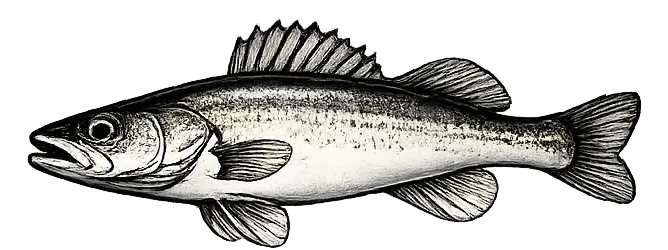
Walleye
Lake Erie has the most famous walleye fishery in the world. Also found in Lake Huron's Saginaw Bay and Lake Ontario's Bay of Quinte.
Yellow Perch
Abundant in Lake Erie and Lake Michigan. Support major commercial and recreational fisheries. Excellent eating.
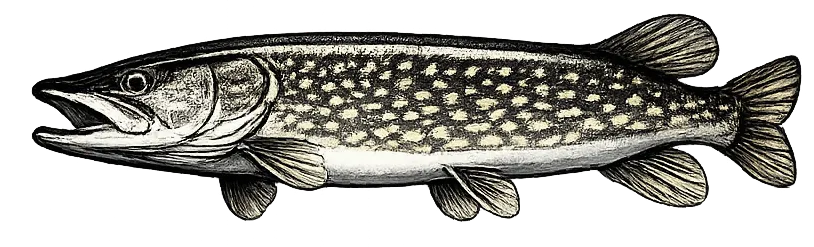
Northern Pike
Found in weedy bays and connecting waters throughout the Great Lakes. Particularly common in Lake Huron's Georgian Bay.
Muskellunge
The largest member of the pike family. Found in Lake St. Clair, the St. Lawrence River, and parts of Lake Huron and Lake Erie.
Bottom Fish and Forage Species
- Lake Whitefish — Important commercial species found in all Great Lakes. Related to salmon but feed on bottom organisms.
- Burbot — The only freshwater cod. Found in deep, cold waters of all Great Lakes.
- Lake Sturgeon — The largest fish in the Great Lakes, reaching over 100 kg. Protected in most areas.
- Alewife — Small forage fish that is a primary food source for salmon and trout. Populations fluctuate significantly.
- Rainbow Smelt — Introduced forage fish now found throughout the Great Lakes.
Invasive Species
- Sea Lamprey — Parasitic fish that nearly wiped out lake trout in the mid-20th century. Control programs continue.
- Round Goby — Bottom-dwelling fish now found throughout the Great Lakes.
- Zebra and Quagga Mussels — Filter feeders that have dramatically altered the Great Lakes ecosystem.
Fishing the Great Lakes
The CatchTales app includes a full fish identification guide covering all Great Lakes species, plus weather, solunar predictions, and catch logging to help you plan and track your Great Lakes fishing trips.
Track Your Fishing with CatchTales
Log your Great Lakes catches with CatchTales. Track species, location, weather, and conditions. The built-in fish ID guide covers every species found in the Great Lakes.
← Back to BlogPublished July 2026 by the CatchTales team.

Written by Maison Louis Design — The Art of Better Digital
Get CatchTales
Ready to start bragging? Download the app and hit the water.
Free version available — upgrade to Pro for $8.99/year or $19.99 lifetime (CAD).