
Best Fishing Times: Solunar Tables Explained
Learn how the moon and sun affect fish feeding behaviour — and how to use solunar predictions to plan your most productive trips.
Every experienced angler knows that timing matters. You can have the perfect lure, the right gear, and a spot that's loaded with fish — but if you're there at the wrong time, you might not get a single bite. That's where solunar tables come in.
What Are Solunar Tables?
Solunar tables predict the best fishing times based on the positions of the sun and moon relative to the Earth. The theory, developed by John Alden Knight in the 1930s, is that the gravitational pull of the moon and sun triggers feeding activity in fish (and wildlife in general).
There are two main feeding periods each day:
- Major periods — Last 1.5-2 hours, occur when the moon is directly overhead or directly underfoot
- Minor periods — Last 30-45 minutes, occur when the moon rises or sets
Many anglers swear by solunar data and plan their entire fishing day around these windows.
How Moon Phases Affect Fishing
Different moon phases can produce different fishing conditions:
New Moon
Many anglers consider the new moon the best fishing phase. The darker nights and stronger tidal movements (especially in marine environments) trigger more aggressive feeding. The days just before and after a new moon often produce excellent catches. The darker conditions also make fish feel more secure in shallow water during the day.
Full Moon
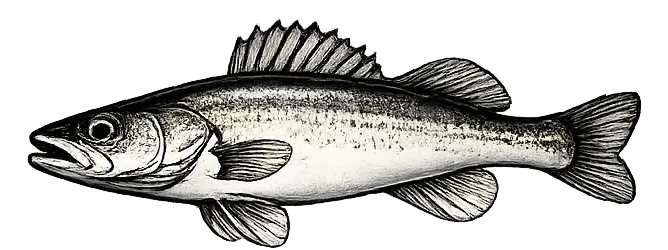
The full moon also provides strong gravitational pull and can trigger excellent feeding, particularly during major solunar periods. Some species, like walleye and catfish, feed aggressively at night during a full moon. During the day, fish may be slightly more sluggish after a night of heavy feeding.
First & Last Quarter
Quarter moons produce weaker gravitational effects, which means less pronounced feeding windows. However, many anglers find that the fishing is more consistent throughout the day rather than concentrated in short bursts. These can be great days for covering water and exploring new spots.
Time of Day Matters Too
Solunar periods are most effective when they align with natural dawn and dusk feeding windows:
- Sunrise — The first hour of light is one of the most consistent feeding periods for most species. Water temperatures are cool, baitfish are active, and predators take advantage.
- Sunset — The last hour of light is often even better than sunrise. Fish feed aggressively before dark, especially in summer when daytime temperatures are high.
- Midday — Generally slower, but a major solunar period coinciding with midday can still produce excellent fishing, particularly in cooler months or overcast conditions.
- Night — For species like walleye, catfish, and striped bass, night fishing during a full moon can be the best time of all.
Weather Overrides Everything
Solunar tables are a guide, but weather often overrides them. A stable barometer, overcast skies, and light wind will produce better fishing than a perfect solunar period during a cold front. Keep these factors in mind:
- Rising barometer (improving weather) — Fish feed actively before a storm arrives
- Falling barometer (approaching storm) — Often triggers a strong feeding bite
- Stable barometer — Consistent, predictable feeding patterns
- Dramatic temperature changes — Can shut down feeding for 24-48 hours
When a major solunar period coincides with stable weather and dawn or dusk, you've hit the sweet spot.
Solunar Tips by Season
Spring (March-May)
Fish are in pre-spawn and spawn modes. Solunar periods near midday can be very productive as water temperatures warm. Focus on major periods during the warmest part of the day in early spring.
Summer (June-August)
Early morning and evening solunar periods are key. Fish retreat to deeper, cooler water during midday. Dawn major periods and dusk minor periods are your best bet for topwater action.
Fall (September-November)
Fish feed aggressively to build fat reserves for winter. Solunar periods throughout the day can be productive, especially during stable weather. This is often the best season for trophy catches.
Winter (December-February)
Fish metabolism slows down, but solunar periods still matter — especially for ice fishing. Major periods around midday, when the sun is highest, tend to produce the best action.
Putting It All Together
Here's how to plan your ideal fishing day:
- Check the solunar forecast — Look for major and minor periods that align with dawn or dusk
- Check the moon phase — New moon and full moon weeks are generally best
- Check the weather — A stable or slowly rising barometer is ideal
- Be on the water 30 minutes before the solunar period starts — Fish often start feeding before the predicted window
- Stay through the period — Even if nothing happens in the first 30 minutes, the best bite can come at any point during the 1.5-2 hour window
Get Solunar Predictions in the CatchTales App
The CatchTales app includes built-in solunar predictions for your exact location. See today's best fishing periods, moon phases, sunrise/sunset times, and weather conditions — all in one place. Available across Canada and the United States.
← Back to BlogPublished July 2026 by the CatchTales team.

Written by Maison Louis Design — The Art of Better Digital
Get CatchTales
Ready to start bragging? Download the app and hit the water.
Free version available — upgrade to Pro for $8.99/year or $19.99 lifetime (CAD).